
GRASSROOTS COACHING: WORKING WITH PARENTS: WHAT NOBODY TELLS YOU BEFORE YOUR FIRST SEASON
- 27 June 2026
- Ged Searson
- 0
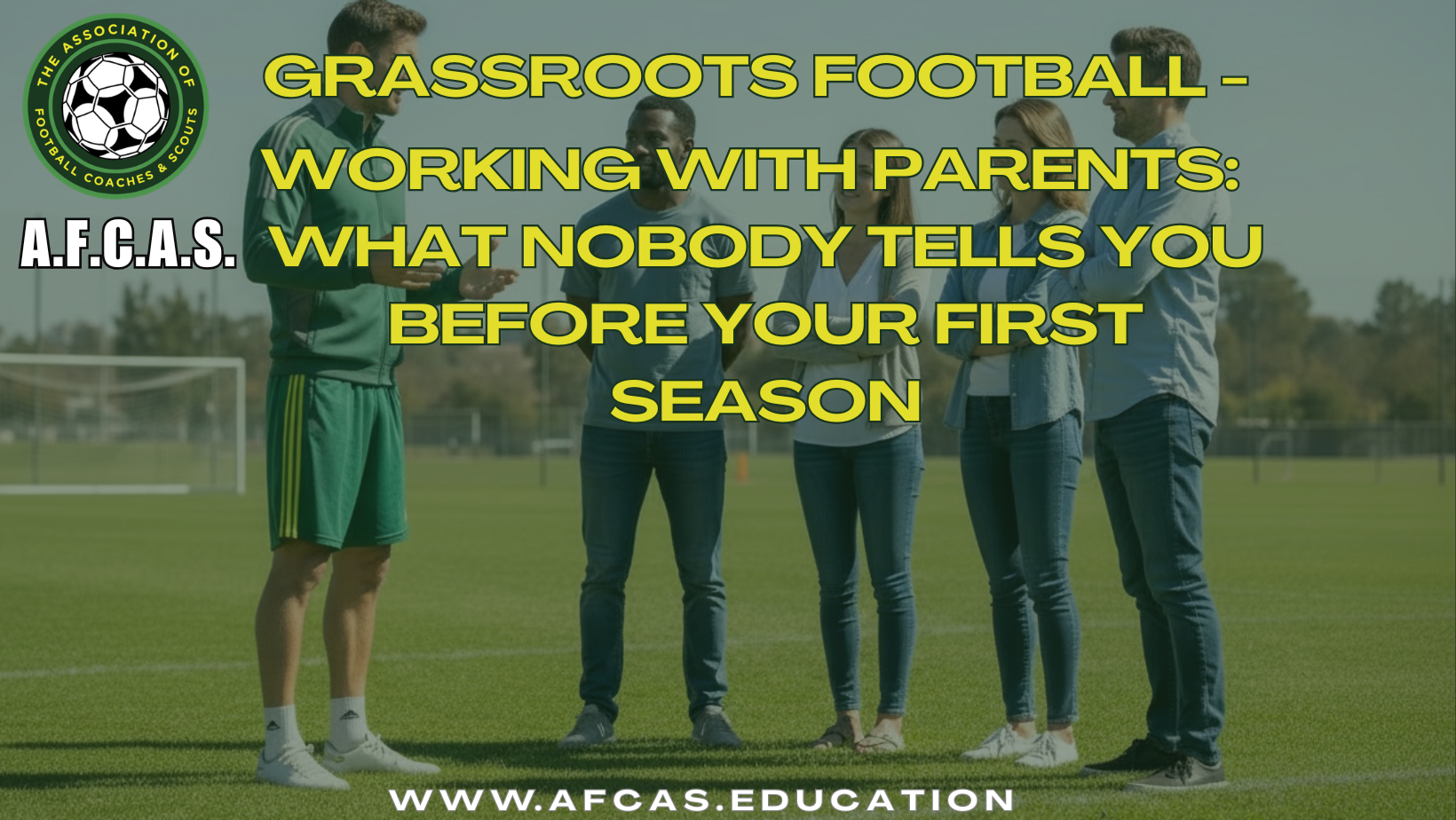

Working With Parents: What Nobody Tells You Before Your First Season
Most new coaches begin their journey believing their biggest challenge will be planning training sessions, teaching passing or organising matchdays.
In reality, one of the biggest challenges has nothing to do with football.
Every new grassroots coach worries about one thing…
It isn’t planning sessions.
It isn’t cones.
It isn’t tactics.
It is managing relationships with parents.
Every grassroots coach will eventually face difficult conversations. Questions about playing time. Position changes. Team selection. Rotation. Winning. Development.
Very few coaching qualifications prepare volunteers for these situations.
Yet how a coach manages the relationship with parents often determines whether a season becomes enjoyable and rewarding, or stressful and exhausting.
Continue Reading
Enter your email to unlock this full article and join the AFCAS coaching & scouting community.
No spam. Unsubscribe anytime.
Working positively with parents is not an optional coaching skill.
It is one of the most important.

THE SCHOOL PLAYGROUND.
Early in my coaching career, I was managing a representative team. We had a talented group of young players who were still learning and developing.
After losing a closely contested match, one player had made several mistakes that contributed to the goals we conceded.
Following the game, both of his parents approached me. His father managed a senior semi-professional team, and understandably they were emotional. They questioned why their son had been asked to play in a different position.
Rather than discussing the issue immediately after the match, I calmly explained that emotions were running high and suggested we speak privately over the following few days.
They agreed.
Unfortunately, the following afternoon they approached me again.
This time it wasn’t at the football ground.
It was in the school playground where I worked as a coach.
Children, parents and teachers were everywhere. Suddenly a private football discussion had become a very public confrontation.
The father made it clear he believed his coaching experience meant he knew the correct decision. From my perspective, rotating players into different positions was a deliberate part of their development. Like many young players, his son would benefit from experiencing different tactical challenges rather than remaining in one role.
Most importantly, making mistakes was part of learning.
I remained calm and once again explained that this wasn’t the appropriate place for the conversation. I reassured them I would contact them privately to discuss their concerns and work together on a plan for their son’s development.
When I later tried to call, they didn’t answer.
Shortly afterwards they withdrew their son from the squad.
At the time it felt incredibly frustrating.
Looking back now, I realise the conversation should never have started after the match.
It should have taken place before the season even began.
THE REAL JOB.
One of the biggest lessons grassroots coaches learn is that coaching football is only part of the role.
Managing the environment around the team is just as important.
Most entry-level coaching qualifications quite rightly focus on session planning, safety, technical coaching and player development.
Those are fundamental coaching skills.
However, they rarely prepare volunteer coaches for the situations they face every weekend:
- Parents questioning playing positions.
- Touchline behaviour.
- Selection disagreements.
- Emotional post-match conversations.
- Communication between coaches and families.
For the vast majority of grassroots coaches, these situations are not occasional—they are inevitable.
Yet many volunteers experience them for the first time without any guidance or framework for managing them.
This is exactly the gap AFCAS aims to fill by providing practical education for the real situations coaches encounter throughout the season.

WHY PARENTS BEHAVE THE WAY THEY DO.
Before coaches can successfully manage parents, they first need to understand them.
Most difficult behaviour doesn’t come from bad intentions.
It comes from emotion.
Parents naturally want the very best for their children.
The most common emotional drivers include:
Pride – wanting to see their child succeed.
Anxiety – concerns about safety, fairness or development.
Competition – comparing children or focusing heavily on winning.
Misunderstanding – not fully understanding the coach’s philosophy, rotation policy or long-term development plan.
Most parents aren’t trying to create conflict.
They’re trying to protect their child.
When coaches understand the emotion behind the behaviour, they stop reacting emotionally themselves and begin responding as leaders.
Looking back, I’m pleased I remained calm in that school playground.
At the time it wasn’t easy.
Today I understand that composure is one of the most important coaching skills a volunteer can develop.
THE MANAGEMENT VACUUM.
Parents don’t simply react to what happens on the pitch.
They also react to what they see from the coach.
If a coach appears uncertain, inconsistent or unprepared, parents naturally begin filling that leadership vacuum.
Usually with good intentions.
When coaches communicate clearly, set expectations early and demonstrate calm authority, parents are far less likely to intervene.
Preparation creates confidence.
Confidence creates trust.
Trust creates better environments for everyone.

THE PRE-SEASON MEETING.
The single most effective way to prevent many parent issues is to hold a structured pre-season meeting before the first competitive fixture.
This meeting should explain:
- The coach’s philosophy.
- Team objectives.
- Player development.
- Rotation policy.
- Position changes.
- Matchday expectations.
- Parent behaviour.
- Communication procedures.
- Codes of conduct.
- Question and answer session.
Following the meeting, provide every family with a written document outlining everything discussed.
This document becomes your reference point throughout the season.
Instead of saying,
“That’s just how I do things…”
you can confidently say,
“We all agreed to this together before the season began.”
That small difference changes everything.
SETTING THE TONE.
Sir Alex Ferguson once said:
“The way you convey your message is crucial. What you say is important, but how you say it determines how well the message will be received.”
Coaches set the emotional tone for the entire football environment.
Players watch them.
Parents watch them.
Assistant coaches watch them.
If the coach reacts emotionally towards referees, opponents or players, others quickly follow.
If the coach remains calm, respectful and composed, those behaviours become the standard.
Leadership is often demonstrated long before the whistle blows.

WHAT GOOD LOOKS LIKE.
The coaches who successfully manage parents are not always the most experienced.
They are usually the best prepared.
They:
- Set expectations early.
- Communicate consistently.
- Understand the emotions driving difficult conversations.
- Maintain clear boundaries.
- Stay calm under pressure.
- Deal with issues privately and respectfully.
Most importantly, they prepare for these situations before they happen.
The challenges of grassroots coaching are remarkably consistent from club to club and season to season.
The difference is that some coaches encounter them unexpectedly, while others have already developed a framework for managing them.
Preparation makes the difference.
GOING DEEPER.
Working effectively with parents is one of the most overlooked skills in grassroots football coaching.
Yet it can have a greater impact on your coaching experience than almost any session you deliver on the pitch.
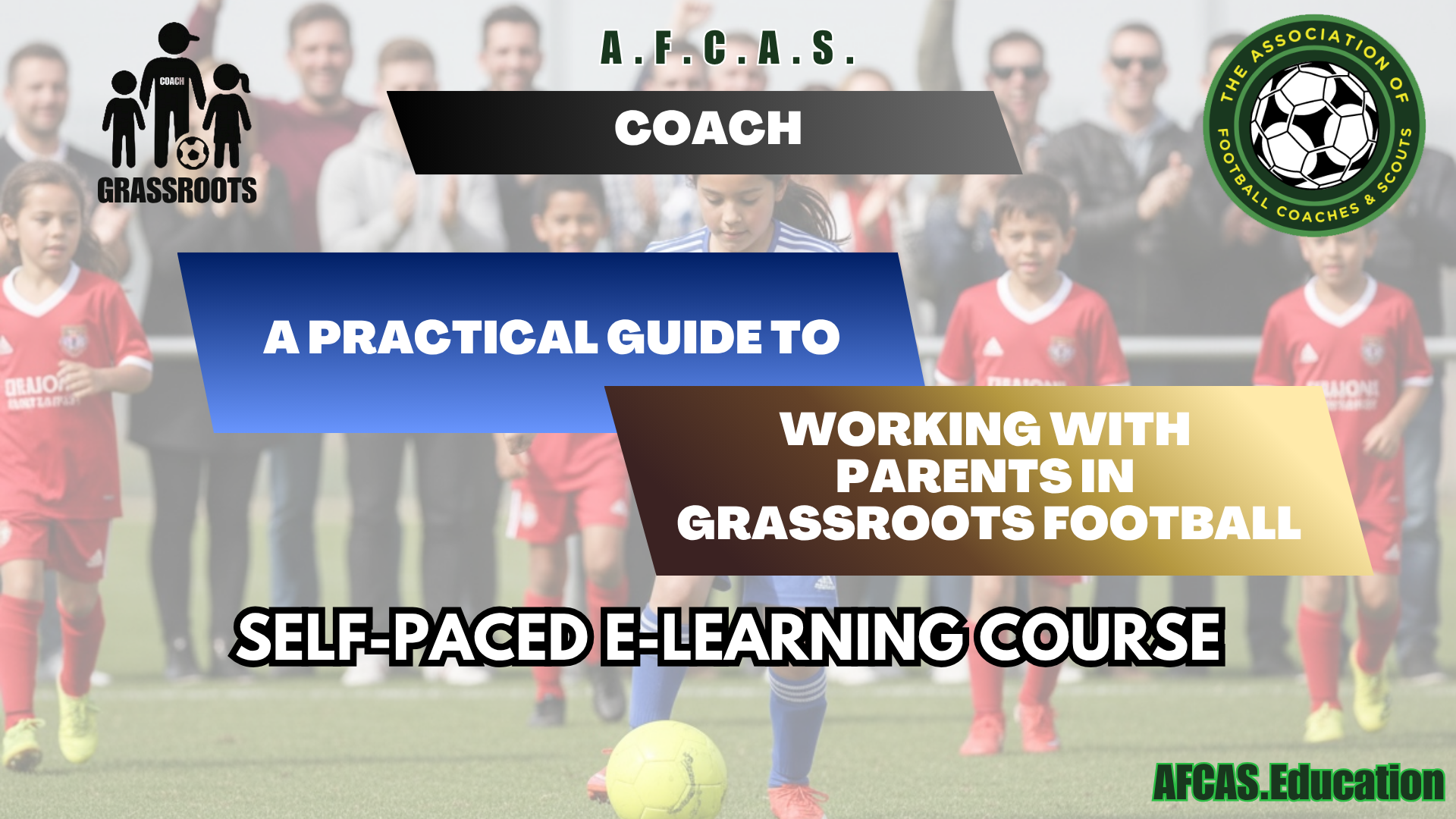
If you’re looking for practical strategies to manage parent relationships, improve communication and create a positive football environment, the AFCAS Working With Parents course provides a structured framework based on the real situations volunteer coaches face every single week.
Our Practical Guide to Working With Parents gives you real strategies used by experienced grassroots coaches to manage parents confidently throughout the season.
Because successful coaching isn’t just about developing players.
It’s about creating an environment where players, parents and coaches can all enjoy the game together.
COURSE DURATION – 45 MINUTES
CLICK HERE – A PRACTICAL GUIDE TO WORKING WITH PARENTS IN GRASSROOTS FOOTBALL

Continue Your Coaching Journey with AFCAS.
✔ Practical Guide to Working With Parents
✔ Beginner Grassroots Coach Course
✔ Join the AFCAS Education Hub
Start your journey today and take the next step in your football coaching career
– AFCAS Grassroots Football Courses – https://afcas.education/grassroots-coaching
– AFCAS US / Canada – Recreational Soccer Coaching – https://afcas.education/recreational-soccer-coaching
MANAGING PARENTS FAQ’S –
How should football coaches deal with difficult parents?
Most difficult situations with parents can be prevented or resolved through four key principles:
Clarify expectations early – Set clear standards before the season begins. Parents who understand the club’s philosophy and code of conduct from the outset are far less likely to become a source of conflict.
Anticipate the triggers – Understanding the emotional drivers behind parental behaviour – pride, anxiety, competition, misunderstanding – allows grassroots coaches to identify issues before they escalate.
Show composure at all times – Coaches set the tone for the entire sideline environment. A calm, authoritative coach creates a culture of respect. A reactive coach legitimises the same behaviour in others.
Follow structured steps – never react emotionally. When an issue arises, acknowledge the concern, defer to an appropriate time and setting, and follow up privately. Emotional reactions in the moment rarely help and often make things worse.
Why is a pre-season parent meeting important?
A pre-season parent meeting is the single most effective step a grassroots football coach can take to prevent issues throughout the season.
It allows coaches to set expectations clearly, explain the team philosophy, share the code of conduct, and build genuine relationships with parents – all before a ball is kicked. Parents who feel informed and consulted are far more likely to be supportive throughout the season.
Following the meeting, a season handbook should be distributed to every family. This reinforces everything discussed and gives the coach a clear reference point if difficult conversations arise later. When issues do occur, the coach can return to what was agreed at the start of the season.
What should parents expect from a grassroots football coach?
Parents should expect a coach who is consistent, professional, and focused on the development and wellbeing of every player.
In practice, this means:
– Communicating expectations and boundaries clearly and consistently
– Responding to conflict calmly using structured language, not emotional reactions
– Acknowledging positive parental contributions and addressing problems discreetly
Calm authority reduces tension, fosters respect, and allows young players to focus on their development. When everyone understands their role – coach, parent, and player – the environment becomes one in which players genuinely thrive.
Should coaches discuss team selection after a match?
No. Post-match discussions about team selection or playing time should always be avoided.
Emotions run high immediately after a match – for players, parents, and coaches alike. It is not a productive environment for a rational conversation and carries a real risk of escalation.
The right approach:
– Acknowledge the concern on matchday and commit to following up
– Hold a private conversation at an appropriate time, away from the pitch
– Use the post-match debrief for positive reinforcement – focus on effort, attitude, and team performance
Coaches who maintain this boundary consistently will earn the respect of parents over time, even those who initially disagree with selection decisions.
Why do parents become emotional during youth football?
Parental emotion during youth football is a natural response to watching a child face challenge or disappointment in a public environment. It is rarely a character flaw.
The most common emotional drivers are:
Pride – Parents want their child to succeed. When that does not happen, it can lead to over-enthusiasm or confrontation with the coaching staff.
Anxiety – Concerns about performance, safety, or fairness can produce reactions that appear disproportionate but are rarely about the incident itself.
Competition – A focus on winning or comparing children with peers drives pressure-based behaviour that ultimately damages player development and enjoyment.
Misunderstanding – Many parents simply lack visibility of the coaching decisions being made. Frustration born from a lack of information is one of the most preventable causes of conflict in grassroots football.
When coaches understand these drivers, they can anticipate difficult moments, respond with empathy, and guide parents towards a more supportive approach.
What should a parent code of conduct include?
A parent code of conduct is most effective when introduced in person at the pre-season meeting and confirmed in writing as part of the season handbook. It should cover:
Welcome and introductions – An introduction to the coaching staff and their approach, building early trust and credibility.
Team and club philosophy – A clear statement that prioritises long-term development, learning, and enjoyment over short-term results.
Parent roles and expectations – What is expected on the touchline and beyond: supportive behaviour, appropriate language, and respect for all players’ development opportunities.
Code of conduct – Clear standards for parents, players, and coaches, including consequences for repeated or inappropriate behaviour.
Matchday procedures – Where parents stand, how the matchday is managed, and how concerns should be raised (after the match, privately, never during play).
Communication plan – How the coaching staff will communicate throughout the season and the correct channel for raising individual concerns.
Q&A session – Space for parents to ask questions before the season begins, demonstrating that the coach is approachable and organised.
How can coaches build positive relationships with parents?
Building positive relationships with parents is an ongoing commitment to professionalism and consistency, not a single action.
Coaches who build strong parent relationships consistently:
Set clear expectations from the outset – Parents who know what to expect are far more likely to be supportive partners throughout the season
Prevent issues rather than manage them – A pre-season meeting, season handbook, and code of conduct are the foundations of a well-run grassroots team
Communicate with confidence and clarity – Regular, structured communication removes the space for misunderstanding to take hold
Maintain calm authority at all times – Composure commands respect. Parents take their cues from the coach
Create a safe environment for every player – Parents who see their child valued, safe, and developing become allies rather than sources of conflict
Positive parent relationships in grassroots football do not happen by chance. They are built deliberately from day one.
Further Reading – The Art of Observation in football coaching – how coaches must adjust their position
Further Reading – Grassroots Football Coaching – The Importance of Technical Demonstrations
Further Reading – How to Identify Mentally Strong Players: Composure on the Ball

Original AFCAS Educational Content
The educational content, coaching principles, scouting methodologies and practical frameworks published within the AFCAS Education Hub have been developed through years of professional coaching, scouting and recruitment experience.
These articles represent original AFCAS educational material and are protected by copyright. Any reproduction, adaptation or commercial use without written permission is prohibited.
Please support original football education by sharing links to the original AFCAS articles rather than reproducing their content.
© AFCAS. All Rights Reserved.
About the Author
George Lappas is an AFCAS Coach Educator, UEFA A Licence coach, First-Team Opposition Scout and Player Recruitment Specialist with over 25 years of coaching and scouting experience.
He is currently Head of Coaching at one of the UK’s largest FA 3-Star Accredited grassroots football clubs and has previously coached within the academies of Fulham, Queens Park Rangers and Watford.
George has worked in professional football as a Recruitment Specialist and Opposition Analyst for Barnet, Leyton Orient, Wigan Athletic, Millwall and the Malawi National Team during the 2022 Africa Cup of Nations (AFCON).
Throughout his career, George has contributed to the development of numerous professional and international players, including Raheem Sterling, Jacob Murphy, Josh Murphy and Zak Sturge. His passion is helping grassroots coaches develop the practical skills and confidence needed to create positive learning environments and support long-term player development.
Published: 26 June 2026
Author: George Lappas
Updated: 27 June 2026