
FOOTBALL SCOUTING COURSES – WHAT SHOULD YOU EXPECT FROM A SCOUT EDUCATION PROVIDER?
- 25 June 2026
- Ged Searson
- 0


FOOTBALL SCOUTING COURSES – WHAT SHOULD YOU EXPECT FROM A SCOUT EDUCATION PROVIDER?
If you are serious about becoming a football scout, choosing the right education provider could be one of the most important decisions you make.
The football scouting industry has grown rapidly in recent years, with more courses available and influencers than ever before. While this is positive for aspiring scouts, it also means you need to look beyond the marketing and ask one important question:
“Will this course genuinely make me a better scout?”
The answer has very little to do with receiving a certificate.
It has everything to do with the quality of the education, the experience of the tutor and provider, the learning environment, and whether you leave the course better prepared to work within professional football.
Here are the key questions every aspiring scout should ask before investing in a scouting course.
1 – ARE YOU LEARNING… OR SIMPLY COLLECTING CERTIFICATES?
One of the biggest misconceptions in football scouting is that collecting certificates leads to employment.
It doesn’t.
Continue Reading
Enter your email to unlock this full article and join the AFCAS coaching & scouting community.
No spam. Unsubscribe anytime.
Professional football clubs recruit scouts because they can identify players, analyse performances, and communicate their observations effectively, not because they have accumulated certificates.
National FA Scouting qualifications, such as The English FA Talent ID program, are valuable and, for some roles, essential. However, these are very different from commercial courses that simply issue a certificate of attendance.
Ask yourself:
“Am I taking this course to receive a certificate, or to genuinely improve as a scout?”
Knowledge opens doors.
Certificates simply record that you attended.
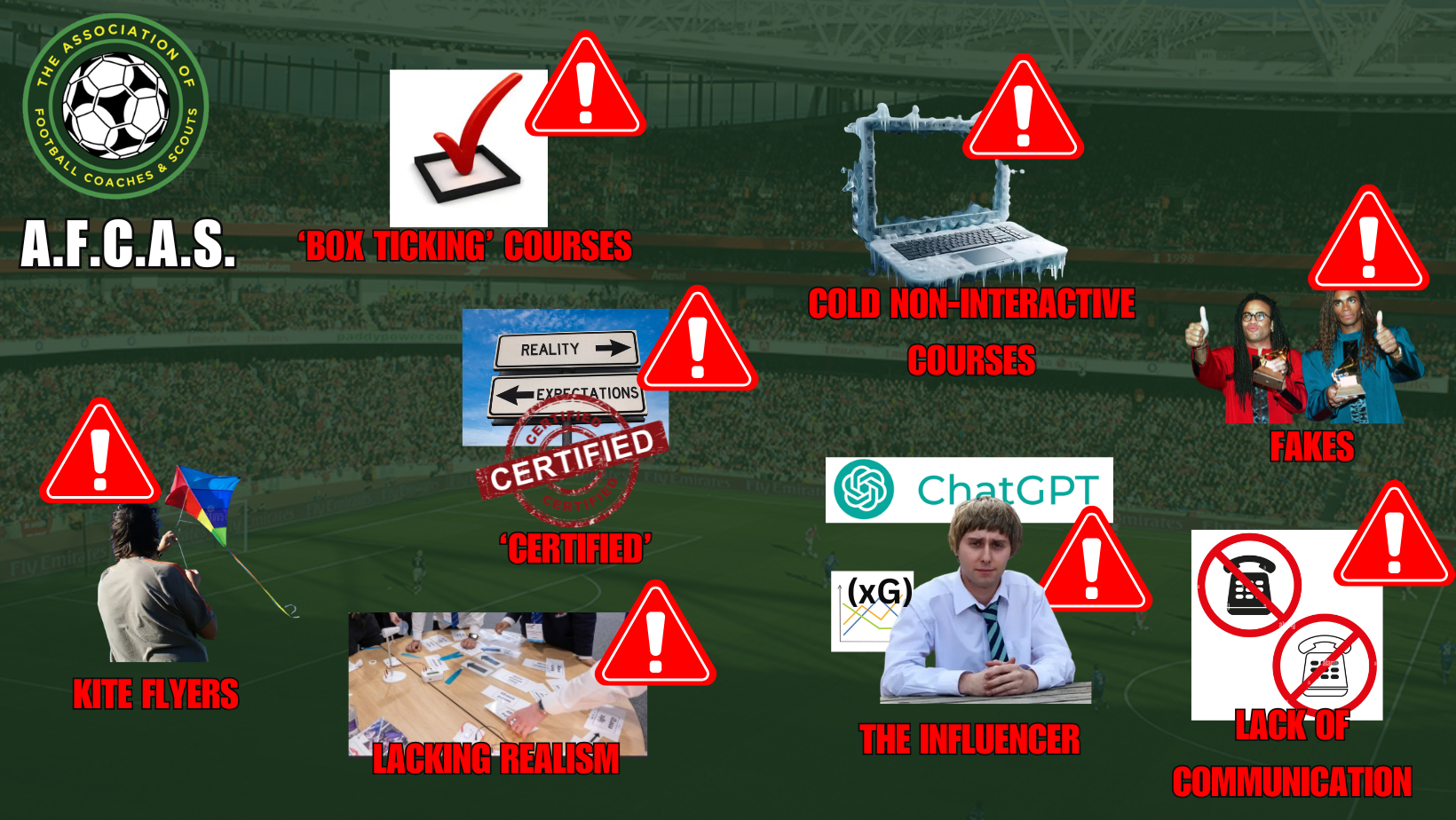
2 – WHO IS ACTUALLY TEACHING YOU?
This may be the single most important question.
Research your tutor.
Have they actually worked within professional football?
Have they been responsible for identifying players, reporting to Managers, Chief Scouts or Heads of Recruitment, and making recruitment recommendations that influenced player signings?
Or are they simply talking about scouting from the outside?
There is a huge difference between understanding scouting and having lived it.
The best education comes from people who have experienced the pressures, expectations and standards of working inside professional football.
It is equally important to consider whether your tutor’s experience matches the type of scouting you want to learn.
For example, if your ambition is to work in player recruitment, are you learning from someone who has actually worked as a professional scout? Better still, have they held senior positions such as Chief Scout or Head of Recruitment, where they were responsible for leading recruitment strategy, making key decisions and overseeing scouting departments?
Likewise, if you are looking to learn opposition scouting, you should seek tuition from someone who has worked specifically in that role within professional football.
Understanding the theory behind opposition analysis is one thing. Producing opposition reports that directly influence match preparation, presenting your findings to coaching staff, and working under the pressure of knowing your information may impact team selection, tactics and match outcomes is an entirely different level of expertise.
Learning from someone with genuine, role-specific experience provides an insight that simply cannot be gained from theory alone. They are not just teaching how to perform the role, they are teaching the standards, expectations and realities of working in that environment.
As the saying goes:
“If you were learning to fly a plane, would you rather be taught by a Boeing 747 pilot, or someone flying a kite in the park?”
The principle is exactly the same.
Learn from people who have done the job.
3 – IS THE LEARNING ENVIRONMENT ACTUALLY INTERACTIVE?
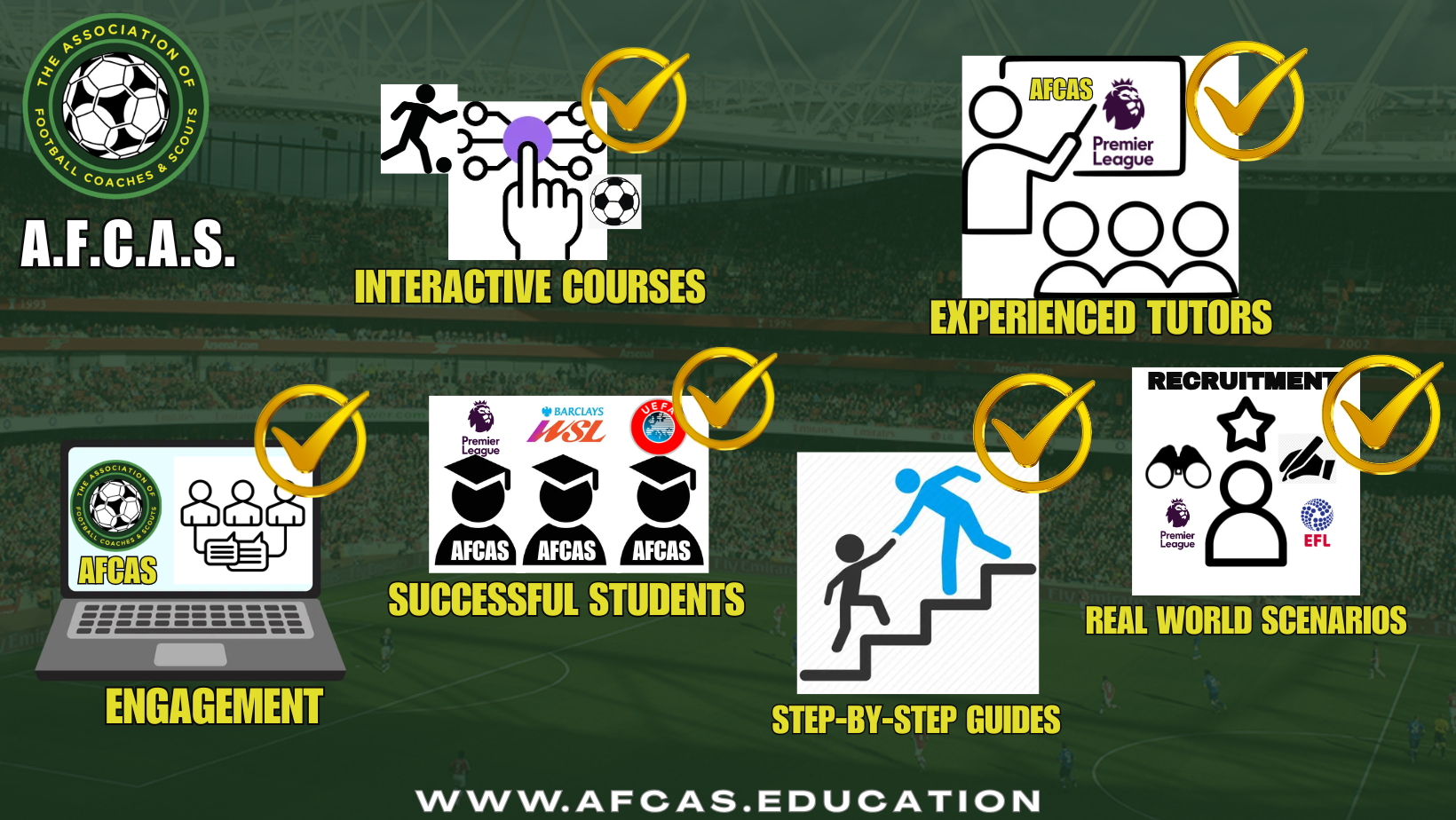
Learning football scouting should never be a passive experience.
Unfortunately, many online courses still follow a lecture format where students simply sit, listen and watch.
Real learning doesn’t happen that way.
You should expect to be involved throughout your education.
Ask yourself:
- Are there practical tasks throughout the course?
- Are you making decisions rather than simply listening?
- Is there a step-by-step learning process?
- Can you ask questions?
- Is there discussion?
- Are you challenged with real-life scouting scenarios?
The more involved you are, the more you learn.
Even in a self-paced course, it must still be interactive, challenging your observations and understanding.
Education should develop understanding, not simply deliver information.
4 – HOW MANY PEOPLE ARE IN THE CLASSROOM?
This question is often overlooked.
Learning in a group of thirty or forty people on Zoom is very different from learning in a small interactive workshop.
Smaller groups create discussion.
They allow questions to be answered.
They encourage participation.
Most importantly, they allow tutors to understand each student’s strengths and areas for development.
Football scouting is a practical profession.
Your education should reflect that.
5 – ARE YOU LEARNING THE SKILLS THAT PROFESSIONAL CLUBS ACTUALLY EXPECT?
A quality scouting course should prepare you for the realities of working inside a football club.
That means learning:
- How to observe players correctly.
- How to assess performance with structure.
- How to evaluate different playing positions.
- How to write concise, professional scout reports.
- How to communicate information clearly to decision-makers.
These are practical skills developed through guidance, repetition and feedback—not by watching a presentation.

6 – THE TRUE MEASURE OF A SCOUT EDUCATION PROVIDER.
One of the most important questions you should ask any football scout education provider is:
“What success have your previous students gone on to achieve?”
The true measure of any education provider is not the number of certificates it awards, it is the success of the people it educates.
Anyone can create a course.
Anyone can issue a certificate.
But how many of their students have actually progressed into professional football?
Have they secured roles at professional football clubs?
Have they gone on to work within National Football Associations or Federations?
Have they progressed into positions such as Professional Scout, Chief Scout or Head of Recruitment?
These are the questions that reveal the real credibility of a football scout education provider.
Another important question to ask is whether professional football clubs actively seek students who have completed that provider’s education program. If clubs repeatedly recruit scouts from the same education provider, it demonstrates confidence in both the quality of the education and the standard of the students it produces.
At AFCAS, we are incredibly proud that over the past seven years many of our students have progressed into scouting and recruitment positions at professional football clubs throughout the UK and internationally, as well as within National Football Associations and Federations.
Even more rewarding is that a number of former AFCAS students who have progressed into Chief Scout and Head of Recruitment roles now actively approach AFCAS when they are looking to recruit new scouts for their own clubs and national federations.
For us, that is the greatest measure of success.
Not the number of certificates we have issued, but the number of students who have gone on to build successful careers within professional football.
When choosing a football scout education provider, don’t simply ask what certificate you will receive. Ask where their previous students are today. The answer to that question will often tell you everything you need to know about the quality of the education.
7 – DOES THE SUPPORT END WHEN THE COURSE FINISHES?
Education should never stop when you receive your course completion email.
One of the biggest frustrations many aspiring scouts experience is feeling like just another number.
A good education provider should build relationships with its students.
You should expect:
- Ongoing communication.
- The ability to ask questions.
- Continued guidance.
- Genuine interest in your progress.
Football is a relationship-driven industry.
Your education provider should reflect those same values.

WHY AFCAS IS DIFFERENT.
At AFCAS, we believe scout education should prepare people for professional football—not simply provide another certificate.
Our Technical Scouting Courses are fully interactive, allowing students to develop their knowledge through practical tasks, decision-making exercises and structured learning.
Our Positional Scouting Workshops are delivered live in small groups, ensuring every student participates, asks questions, completes real-life recruitment scenarios, and receives personal guidance throughout the program.
Perhaps most importantly, we build lasting relationships with our students.
Many of our students stay in regular contact long after completing their education, seeking advice, discussing opportunities and continuing their development.
We don’t measure success by the number of certificates we issue.
We measure success by the number of students progressing within football.
Today, AFCAS students are working throughout the game, from volunteers taking their first steps into scouting to scouts at professional clubs, including Chief Scouts and Heads of Recruitment. Our Football Scouting Students have progressed onto roles in the English Premier League, the English Football League (EFL), English Women’s Super League (WSL), and the Scottish Premier League. With many other students at Clubs across Europe, which are competing in European Competitions, and with further scouts currently with clubs in the MLS in the United States.
There is no greater endorsement of an education program than the success of the people it has helped develop.
AFCAS STUDENTS
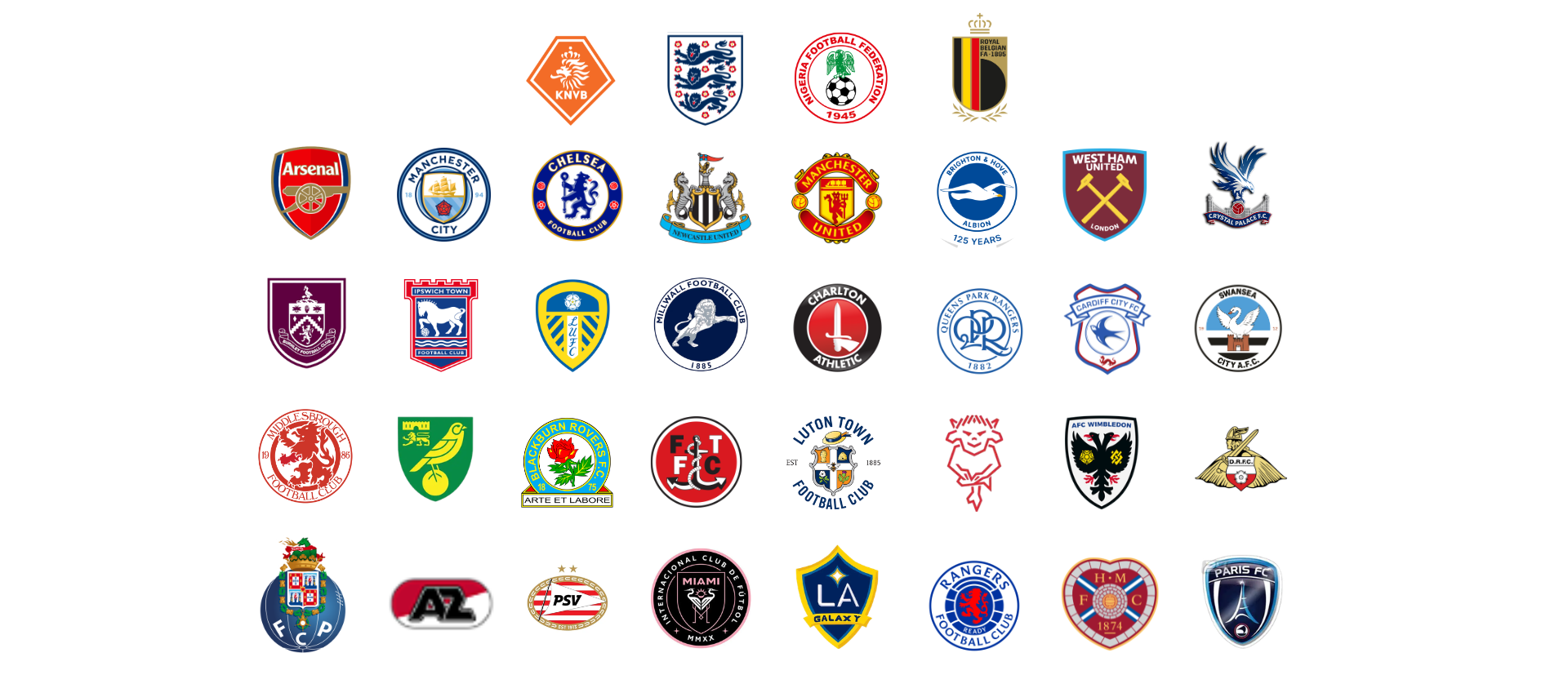
Our students have joined AFCAS from, or progressed to opportunities with, some of the world’s leading football clubs and associations, including:
National Football Associations
Dutch FA • English FA • Nigerian FA • Belgian FA
Professional Clubs
Arsenal • Manchester City • Chelsea • Manchester United • Newcastle United • Brighton & Hove Albion • West Ham United • Crystal Palace
Burnley • Ipswich Town • Leeds United • Millwall • Charlton Athletic • Queens Park Rangers • Cardiff City • Swansea City
Middlesbrough • Norwich City • Blackburn Rovers • Fleetwood Town • Luton Town • Lincoln City • AFC Wimbledon • Doncaster Rovers
FC Porto • AZ Alkmaar • PSV Eindhoven • Inter Miami • LA Galaxy • Rangers • Heart of Midlothian • Paris FC
…and many more.
Start your AFCAS – Scouting Journey today – Click here
CHOOSE EDUCATION THAT PREPARES YOU FOR PROFESSIONAL FOOTBALL
The right scouting course should do far more than teach theory.
It should challenge you.
Develop you.
Prepare you.
And give you the confidence to operate within a professional football environment.
Choose your education provider carefully.
Because the quality of your learning today will shape the opportunities available to you tomorrow.
If you are ready to learn football scouting in a truly interactive environment, explore the AFCAS Technical Scouting Courses and Positional Scouting Workshops, and discover why so many aspiring and experienced scouts choose AFCAS to support their journey into professional football.
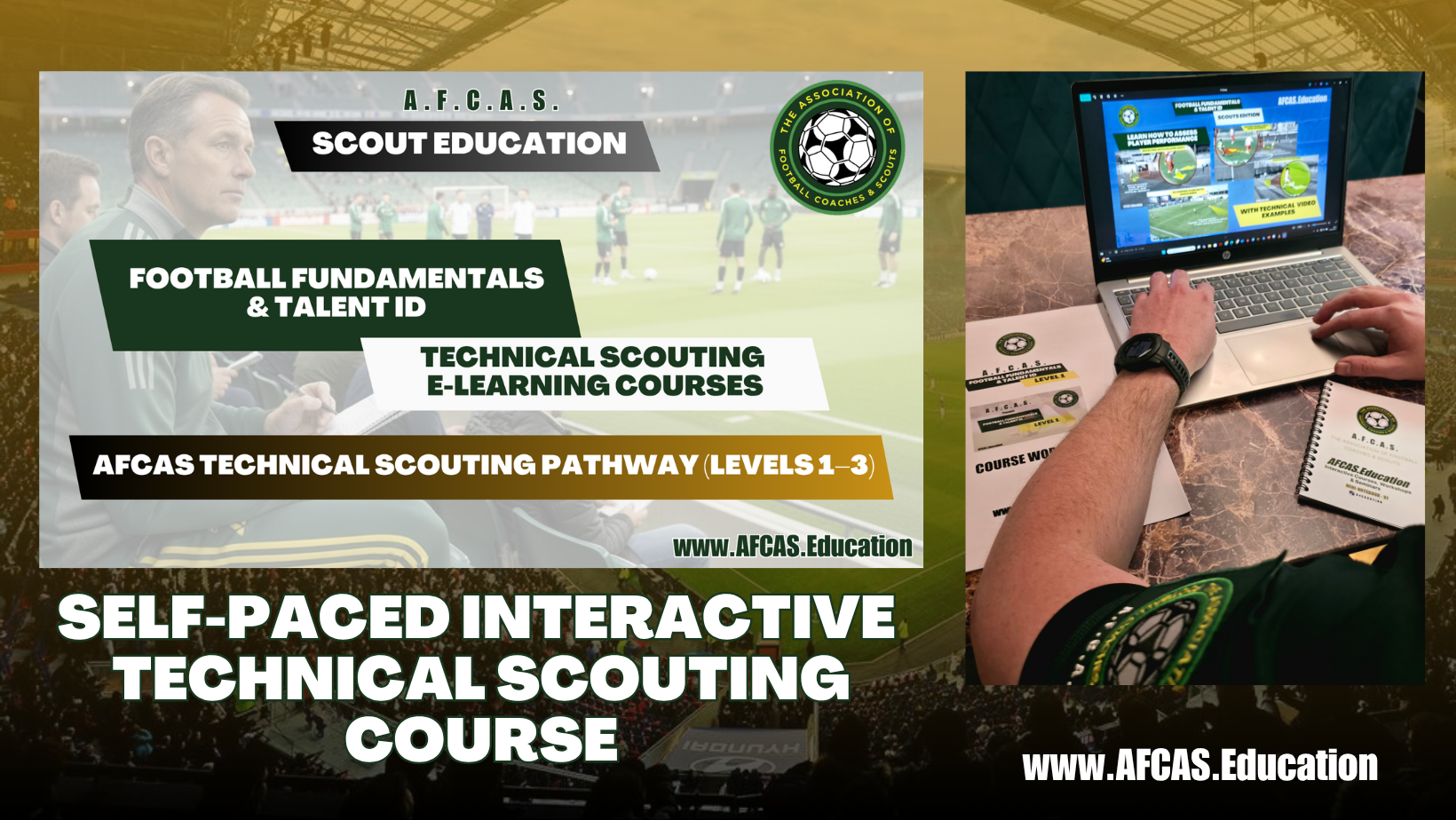
WE DON’T JUST WANT YOU TO COMPLETE OUR COURSES – WE WANT YOU TO SUCCEED!
At AFCAS, our success is measured by your success.
From the moment you join AFCAS, we want to build a genuine relationship with you. We want to understand your ambitions, help you develop your knowledge, and support you as you progress through your scouting journey.
We don’t see our students as customer numbers or course completions. We see them as future scouts, recruiters, analysts, and decision-makers within the game.
That is why our support doesn’t end when a course finishes.
Whether you need advice on improving your scout reports, guidance on approaching clubs, feedback on your work, or simply someone to discuss the next step in your journey, we are always happy to help.
We celebrate every student’s progress, whether that is securing their first voluntary scouting opportunity, joining a semi-professional club, or progressing into roles within the professional game.
Over the years, many AFCAS students have gone on to work at professional football clubs, with a number progressing into Senior Scout, Chief Scout and Head of Recruitment positions. There is no greater reward for us than seeing our students achieve their ambitions.
Our philosophy is simple:
If you succeed, then we have succeeded.
That is why we are passionate about providing an education that is interactive, practical and honest—one that prepares you for the realities of football scouting and supports you long after the course has ended.
Because at AFCAS, you are not just enrolling on a course.
You are joining a community of people who genuinely want to see you develop, progress and build a successful future in football scouting.
AFCAS – Technical Scouting Program – https://afcas.education/football-scouting
Frequently Asked Questions
What should I look for in a football scouting course?
The first thing you should look for is interaction.
Football scouting cannot be learnt simply by sitting through lectures or watching videos. A high-quality scouting course should require you to become actively involved in the learning process through interactive tasks, player assessments, decision-making exercises and real-life scouting scenarios.
The more opportunities you have to make decisions, analyse players and receive feedback, the more you will develop as a scout. Learning should replicate the demands of real football scouting, not simply provide information.
Are football scouting certificates enough to get a job?
No. Definitely not.
A certificate simply demonstrates that you have attended or completed a course. It does not prove that you understand player assessment, can identify talent, or can produce professional-quality scout reports.
Professional football clubs recruit scouts based on their knowledge, observation skills, decision-making and the quality of the work they produce, not because they have collected certificates.
For some senior recruitment positions, National FA Talent Identification qualifications may be required alongside significant experience working within professional football. However, for someone seeking their first opportunity, clubs are looking for evidence that you understand the role and can consistently produce work to the standard expected within a professional recruitment department.
Certificates do not open doors, your knowledge, ability and the quality of your work do.
Who should teach football scouting?
Football scouting should be taught by someone who has actually worked within professional football recruitment.
There is a significant difference between learning scouting theory and learning from someone who has carried out the role under the pressures and expectations of the professional game.
Ideally, your tutor should have held positions such as Professional Scout, Chief Scout or Head of Recruitment, with first-hand experience of identifying players, producing recruitment reports and making recommendations that influence recruitment decisions.
The same applies to Opposition Scouting. Preparing opposition reports requires specialist knowledge that can only truly be understood by someone who has worked in that environment. Opposition reports influence match preparation, tactical planning and, ultimately, results on the pitch. Only someone who has experienced the responsibility and pressure of delivering accurate information to managers and coaching staff can provide genuine insight into what the role demands.
Real experience creates real education.
Should football scouting courses be interactive?
Absolutely.
Interaction should not be seen as an added feature, it should be considered essential.
Traditional lecture-style learning often encourages passive listening rather than active participation. Football scouting is a practical skill that develops through observation, analysis and decision-making.
Whether you are attending an in-person workshop or completing an online self-paced course, you should be actively involved throughout your learning. Interactive video analysis, player assessment exercises, decision-making tasks and practical scouting scenarios all help develop the skills required in professional football.
If your education isn’t interactive, it is unlikely to prepare you fully for the realities of football scouting.
What practical experience should a football scouting course include?
A quality football scouting course should prepare you for the situations you will encounter when working within professional football.
This should include:
- Assessing players through structured observation.
- Identifying strengths, weaknesses and future potential.
- Analysing players in different positions.
- Writing professional scout reports.
- Making recruitment recommendations.
- Analysing tactical systems and team performance.
- Working through real-life scouting scenarios and decision-making exercises.
The objective should not simply be to complete a course, but to develop the confidence and practical ability to produce work that meets the expectations of professional football clubs.
How do I know if a football scouting course is credible?
Before investing in any scouting education, ask yourself a few important questions.
- Is the course taught by someone who has worked professionally as a scout, Chief Scout or Head of Recruitment?
- Does the education provider have genuine experience within professional football recruitment?
- Is the course interactive and based around practical learning?
- Are students encouraged to make decisions and complete real scouting tasks?
- Does the provider have a proven track record of developing scouts who have progressed into roles within professional football?
A credible education provider should be able to demonstrate not only their own professional experience, but also the success of the students they have developed.
What questions should I ask before buying a football scouting course?
Before enrolling on any football scouting course, ask the following questions:
- Is the course genuinely interactive or is it simply a series of lectures?
- Will I be actively assessing players and making scouting decisions throughout the course?
- Who is teaching the course, and what experience do they have working within professional football recruitment?
- Has the tutor worked as a Professional Scout, Chief Scout or Head of Recruitment?
- Will I learn how to write professional scout reports?
- Does the course prepare me for real-life scouting situations?
- Will I receive practical knowledge that I can immediately apply when attending live matches?
- Have previous students progressed into roles within professional football?
Choosing the right football scouting course is one of the most important decisions you will make at the beginning of your scouting journey. Look beyond the promise of a certificate and focus on finding an education provider that will genuinely develop your knowledge, practical skills and confidence to work within the professional game.
Further Reading – Football Scouting: A Beginner’s Guide to Football Scouting
Further Reading – Football Scouting: How to Target the Right Club and Making the Perfect First Impression
Further Reading – Football Scouting: The Importance of Live Match Networking as a Football Scout

Originally published by AFCAS – Association of Football Coaches and Scouts
The coaching frameworks, scouting methodologies, player assessment models and educational content contained within the AFCAS Education Hub have been developed from the practical experiences of AFCAS educators working within grassroots, academy, professional and international football.
Original AFCAS Educational Content
The educational content, coaching principles, scouting methodologies and practical frameworks published within the AFCAS Education Hub have been developed through years of professional coaching, scouting and recruitment experience.
These articles represent original AFCAS educational material and are protected by copyright. Any reproduction, adaptation or commercial use without written permission is prohibited.
Please support original football education by sharing links to the original AFCAS articles rather than reproducing their content.
© AFCAS. All Rights Reserved.
About the Author
Ged Searson is the Managing Director of AFCAS and has over 30 years of coaching and scouting experience. He is a former Premier League First Team Scout, former EFL scout and former Chief Scout of the Malawi National Team. Through AFCAS, he has educated coaches and scouts from across the UK and around the world.
Published: 26 June 2026
Author: Ged Searson
Updated: 27 June 2026