SCOUTING CONTEXT: IS THE FIFA WORLD CUP REALLY THE HIGHEST LEVEL OF FOOTBALL?
Or Has the UEFA Champions League Become the Ultimate Test of Elite Players?
For generations, football supporters have regarded the FIFA World Cup as the pinnacle of the game.
Every player dreams of lifting the famous trophy.
Every nation dreams of becoming World Champions.
It is unquestionably football’s most prestigious competition.
But prestige and playing standard are not always the same thing.
Former Manchester United captain Roy Keane has previously argued that the UEFA Champions League may actually represent a higher standard of football than the World Cup.
It’s an interesting debate.
And, from the perspective of a professional football scout or recruitment department, it raises an even bigger question.
Which competition provides the best context for assessing elite players?
As our recent AFCAS Scouting Methodology series has explored, context is everything when assessing footballers.
Perhaps no debate highlights that principle more than comparing the World Cup with the Champions League.

THE CASE FOR THE CHAMPIONS LEAGUE
The Champions League brings together many of the finest club sides in world football.
Unlike international teams, these players train together every day.
They work within highly developed tactical systems.
Relationships are built over months and years.
The tempo is relentless.
The decision-making required is exceptional.
Every player is surrounded by elite teammates.
For recruitment departments, this provides a valuable environment.
Players are assessed against opponents operating at the highest tactical and technical level week after week.
When a midfielder consistently performs against the likes of Real Madrid, Manchester City, Bayern Munich or Paris Saint-Germain, scouts gain evidence that their qualities translate against elite opposition.
In many ways, the Champions League offers football’s most demanding tactical examination.

THE CASE FOR THE WORLD CUP
Then again…
The World Cup asks very different questions.
International coaches have only limited time to prepare.
Players arrive from different clubs, different leagues and different tactical systems.
Some have never played together before.
Yet within weeks they are expected to perform under the greatest pressure football can offer.
Every player represents their country.
Every mistake is magnified.
Every success becomes history.
The pressure is extraordinary.
From a scouting perspective, tournaments reveal qualities that domestic football often cannot.
Leadership.
Mental resilience.
Decision-making under pressure.
Adaptability.
Character.
How players respond when carrying the expectations of an entire nation.
These are qualities every recruitment department values.

IS EVERY WORLD CUP PLAYER ELITE?
Another argument often raised is that every player at the World Cup represents the very best footballer available to their country.
After all, every nation has fought through qualification to earn its place.
Even nations viewed as outsiders have overcome significant challenges simply to reach the tournament.
That suggests the overall standard should be exceptionally high.
However, reality is slightly more complicated.
Footballing nations vary enormously in depth and resources.
The gap between some countries remains significant.
That occasionally produces one-sided matches and scorelines that would rarely be seen in the latter stages of the Champions League.
This is another reminder that scouts must always assess performances within their proper context.
HAS THE CHAMPIONS LEAGUE LOST SOME OF ITS ELITE STATUS?
Equally, the Champions League has changed.
For many supporters it is no longer truly a “Champions League.”
When the competition began, only league champions qualified.
Today, clubs finishing fourth or fifth in Europe’s strongest leagues can participate.
The tournament has expanded considerably.
Some early-stage fixtures now feature significant differences in quality.
Large victories have become increasingly common.
So has the Champions League also become less exclusive?
Perhaps.
Which again raises the question:
What actually defines elite competition?
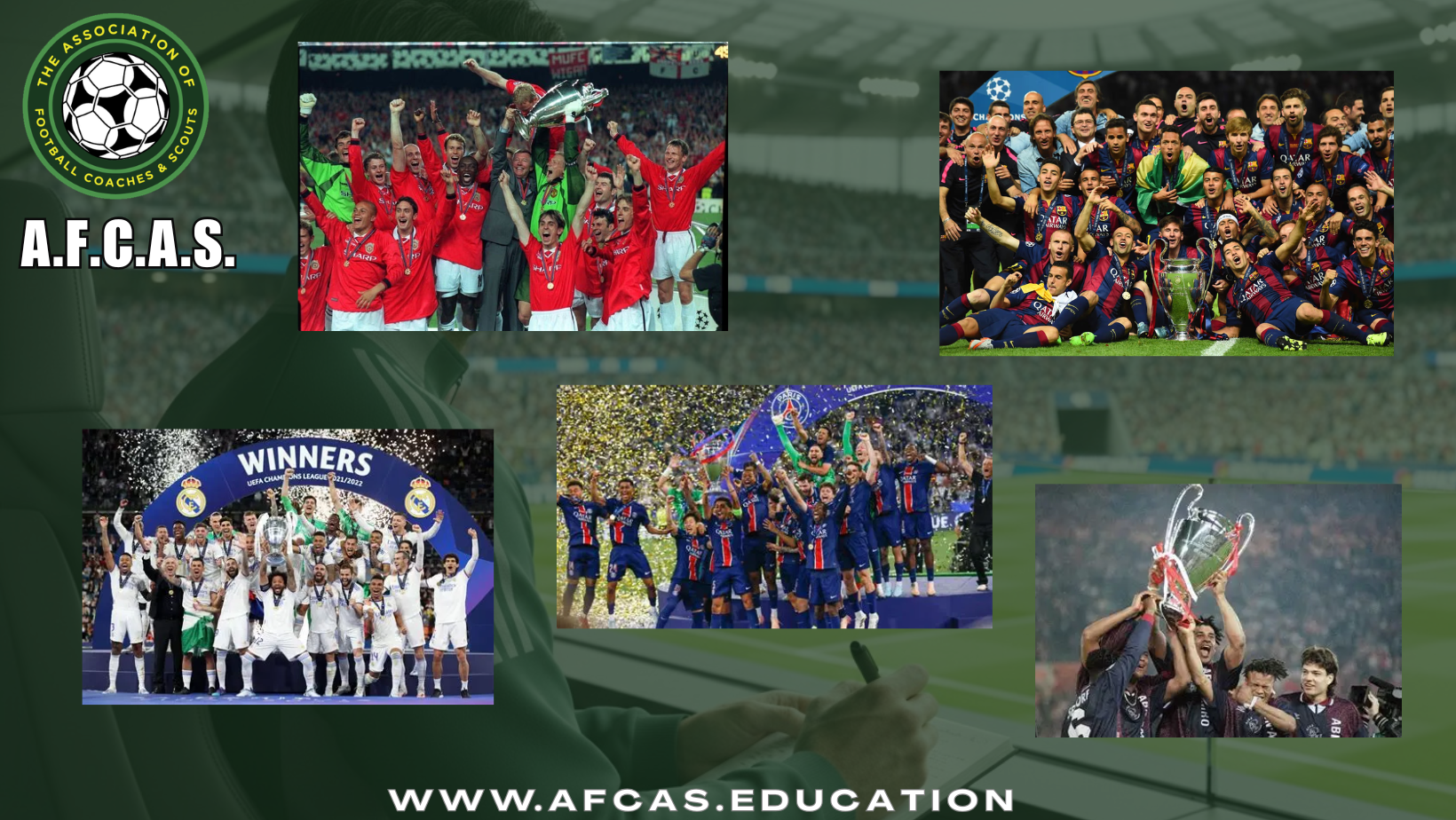
THE PLAYERS WHO NEVER GOT THE CHANCE
History also reminds us that the World Cup has never featured every truly elite footballer.
George Best never appeared at a World Cup.
George Weah never appeared.
Ryan Giggs never appeared.
Ian Rush never appeared.
Liam Brady never appeared.
Abedi Pele never appeared.
Even Gareth Bale only experienced the tournament once, at the very end of his international career.
Their absence says nothing about their quality.
Sometimes geography, the strength of a national team, or simply timing determines whether a player ever reaches football’s biggest stage.
It is another reason why recruitment departments should never judge players solely by World Cup performances.
SO WHICH COMPETITION IS THE BETTER SCOUTING ENVIRONMENT?
Perhaps the answer is…
Neither.
Or perhaps both.
The Champions League may provide the highest tactical standard.
The World Cup may provide the greatest psychological challenge.
One tests players within sophisticated club systems.
The other tests adaptability under immense national expectation.
Professional scouts shouldn’t view one competition as superior.
They should understand what each competition reveals.
Because every environment asks different questions.
And every environment provides different answers.
That is exactly why context remains the foundation of professional football scouting.

OVER TO YOU…
So here’s the debate.
Which competition do you believe represents the highest level of football?
🏆 The FIFA World Cup?
🏆 The UEFA Champions League?
Or is there another competition you believe provides the ultimate test?
Bonus question…
Name one world-class player who never played in a FIFA World Cup, but who you believe deserved to perform on football’s biggest stage.
I’ll start with…
George Best.

AFCAS STUDENTS
Our students have joined AFCAS from, or progressed to opportunities with, some of the world’s leading football clubs and associations, including:
National Football Associations
Dutch FA • English FA • Nigerian FA • Belgian FA
Professional Clubs
Arsenal • Manchester City • Chelsea • Manchester United • Newcastle United • Brighton & Hove Albion • West Ham United • Crystal Palace
Burnley • Ipswich Town • Leeds United • Millwall • Charlton Athletic • Queens Park Rangers • Cardiff City • Swansea City
Middlesbrough • Norwich City • Blackburn Rovers • Fleetwood Town • Luton Town • Lincoln City • AFC Wimbledon • Doncaster Rovers
FC Porto • AZ Alkmaar • PSV Eindhoven • Inter Miami • LA Galaxy • Rangers • Heart of Midlothian • Paris FC
…and many more.

Start your AFCAS – Scouting Journey today – Click here

Originally published by AFCAS – Association of Football Coaches and Scouts
The coaching frameworks, scouting methodologies, player assessment models and educational content contained within the AFCAS Education Hub have been developed from the practical experiences of AFCAS educators working within grassroots, academy, professional and international football.
Original AFCAS Educational Content
The educational content, coaching principles, scouting methodologies and practical frameworks published within the AFCAS Education Hub have been developed through years of professional coaching, scouting and recruitment experience.
These articles represent original AFCAS educational material and are protected by copyright. Any reproduction, adaptation or commercial use without written permission is prohibited.
Please support original football education by sharing links to the original AFCAS articles rather than reproducing their content.
© AFCAS. All Rights Reserved.
About the Author
Ged Searson is the Managing Director of AFCAS and has over 30 years of coaching and scouting experience. He is a former Premier League First Team Scout, former EFL scout and former Chief Scout of the Malawi National Team. Through AFCAS, he has educated coaches and scouts from across the UK and around the world.
Published: 30 June 2026
Author: Ged Searson
Updated: 30 June 2026