
FOOTBALL COACHING – THE ART OF OBSERVATION IN FOOTBALL COACHING: HOW COACHES MUST ADJUST THEIR POSITION.
In modern football coaching, the ability to observe effectively is just as important as delivering sessions. The best coaches understand that observation in football coaching is not static—it requires constant movement, awareness, and adaptation.
To truly understand player performance, coaches must adjust their position on the pitch to gain different perspectives. This approach allows for deeper insights into individual behaviours, team dynamics, and decision-making, ultimately improving player development in football.
Developing strong observational skills is a key part of mastering football coaching techniques, especially for coaches looking to progress into higher-level environments.

Why Observation Position Matters in Football Coaching
Effective observation in football coaching goes beyond simply watching a session unfold. Where a coach stands directly influences what they see.
Remaining in one position limits perspective. By moving around the pitch, coaches can:
- Identify strengths and weaknesses more accurately
- See both on-the-ball and off-the-ball movements
- Gain a clearer understanding of decision-making under pressure
This dynamic approach is essential for any coach aiming to improve their football training methods.
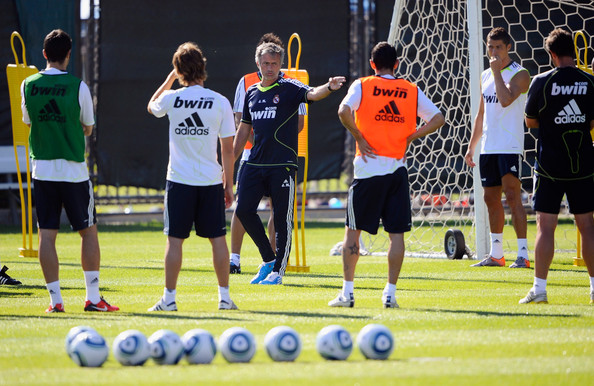
Coaching Interactions: Step In, Then Step Out
A key part of coaching is interaction, demonstrating techniques and providing feedback in real time.
However, effective coaches understand the importance of timing and positioning:
- Step in to demonstrate or correct
- Deliver clear, concise coaching points
- Then step out quickly to resume observation
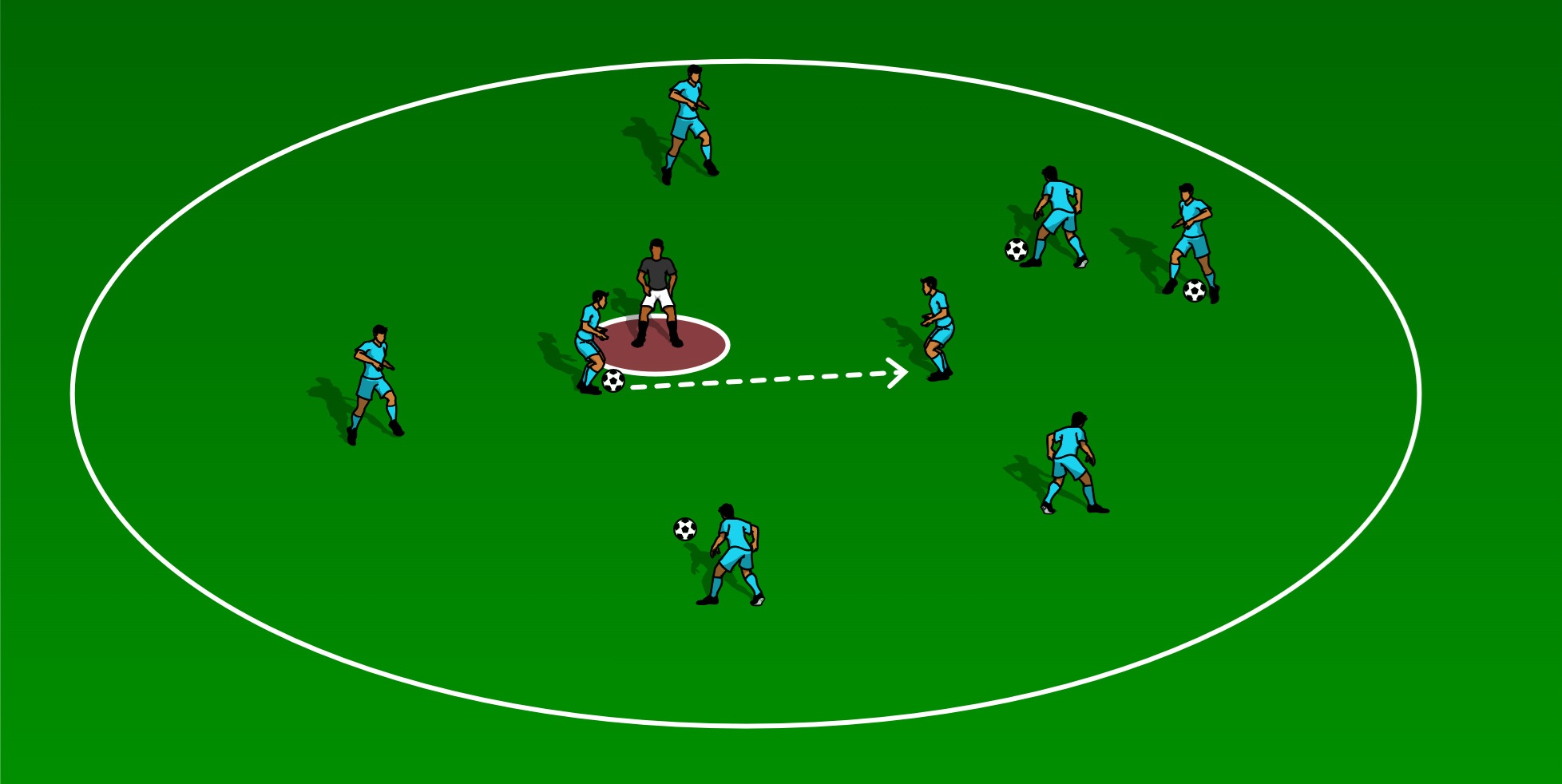
By moving away after the interaction, the coach can assess how the player applies the instruction immediately. This ensures the session flows naturally while maintaining high-quality technical coaching in football.
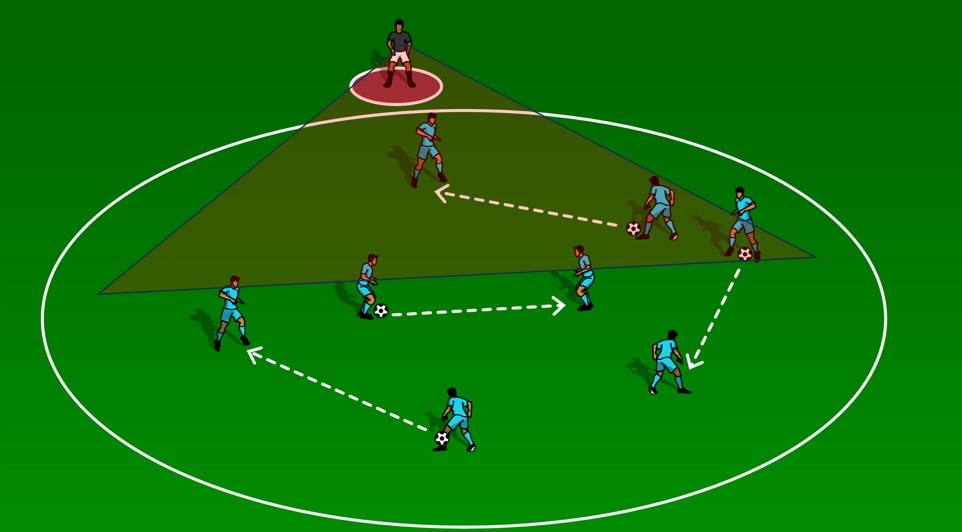
Understanding Player Dynamics Through Movement
To fully understand a player’s performance, coaches must observe from multiple angles.
For example:
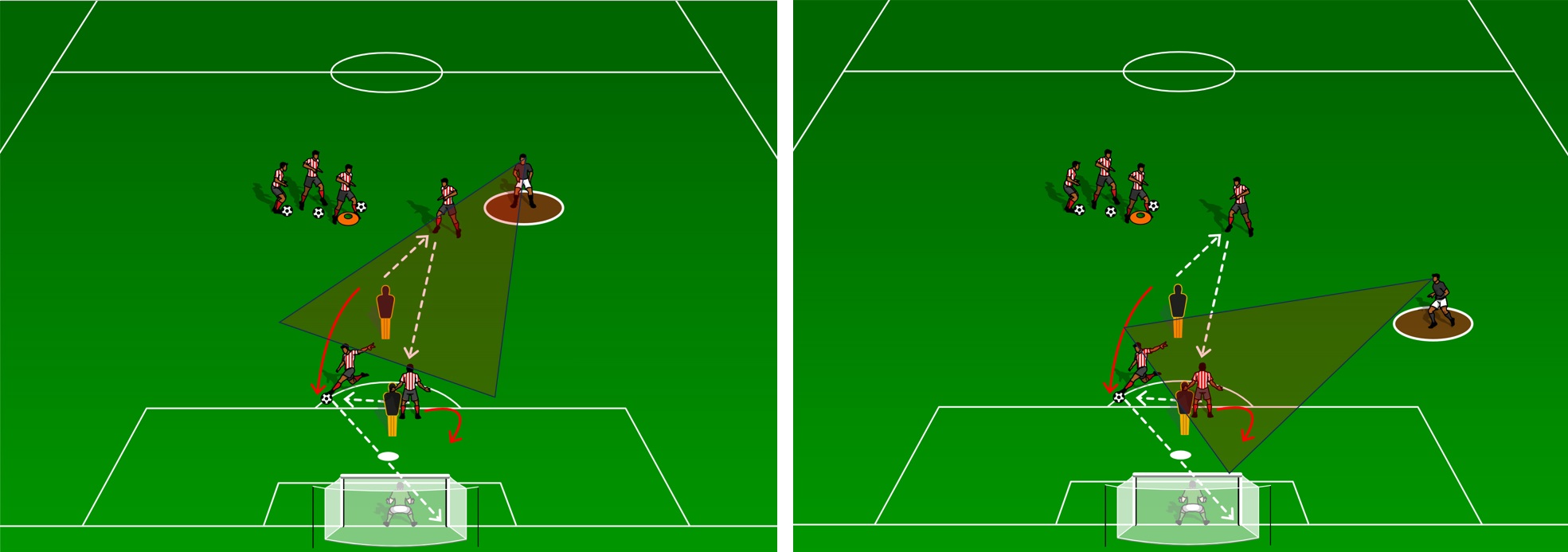
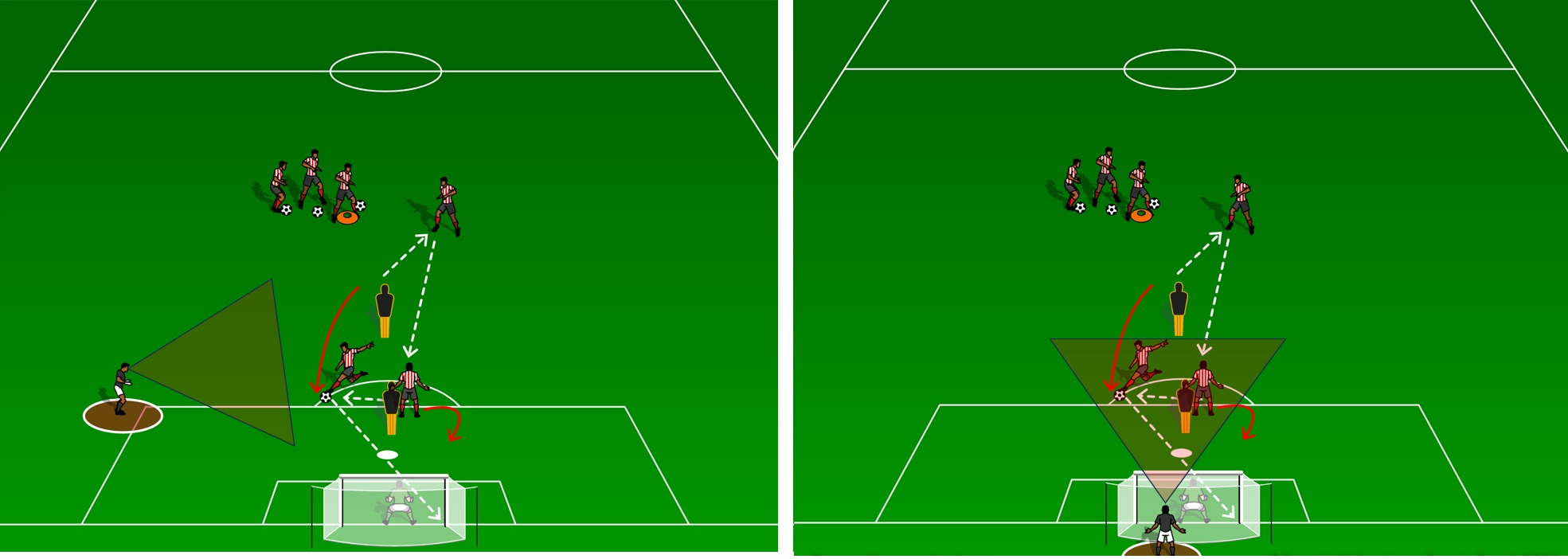
- Viewing a striker from behind the goal highlights movement, timing, and finishing decisions
- Observing from the side may show body shape and link-up play
- A central position provides a full view of team structure and spacing
Each position reveals different insights. This is why observation in football coaching must be active, not passive.
Observing Small-Sided Games and Match Play
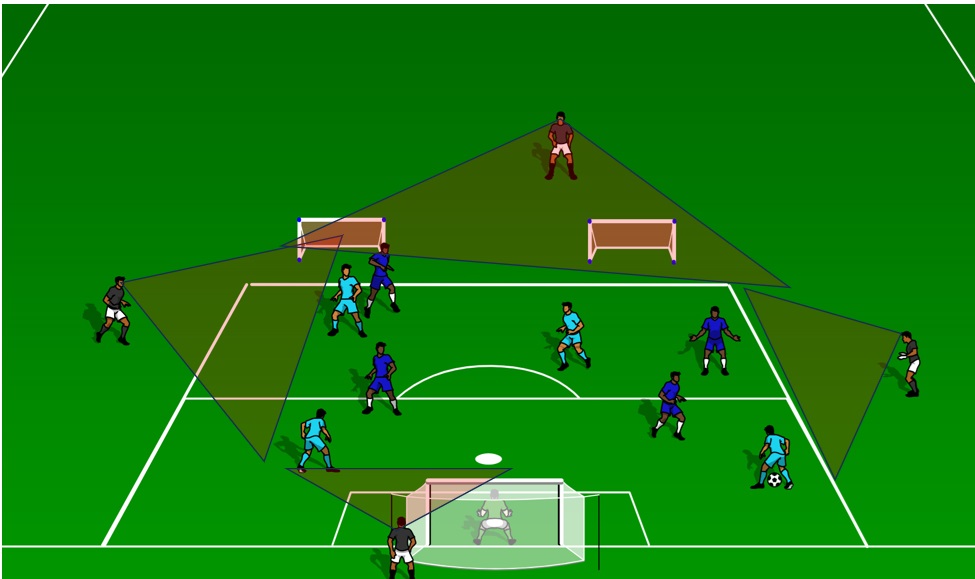
During small-sided games or match scenarios, observation becomes even more important.
A coach may begin in a central position to assess:
- Team shape
- Player interactions
- Overall tempo
But staying static limits understanding.
By adjusting position, coaches can:
- Focus on specific players or units
- Analyse decision-making in tight areas
- Observe off-the-ball movement and awareness
This level of detail is essential for improving player development in football and refining team performance.
The Importance of Varied Viewing Angles
Adjusting observation position is not random—it should be intentional and strategic.
Comprehensive Analysis
Different angles provide a complete picture. What appears to be a mistake from one viewpoint may actually be a correct tactical decision from another.
Identifying Patterns
Observing from multiple positions helps coaches recognise patterns in behaviour, movement, and decision-making.
Delivering Tailored Feedback
With a full understanding of performance, coaches can provide more specific and impactful feedback.
Enhancing Communication
Players recognise when a coach is actively engaged. Movement and repositioning demonstrate attention to detail and commitment to improvement.
Maintaining Player Focus
When players know they are being observed from different angles, it encourages consistent effort and concentration throughout the session.
Real Coaching Example: Observation in Practice
In a finishing session, a coach may initially observe from the side, focusing on technique and ball contact.
However, by moving behind the goal, the coach gains a completely different perspective—seeing:
- The striker’s movement across defenders
- Timing of runs
- Decision-making in front of goal
This simple adjustment transforms the quality of feedback and highlights why observation in football coaching is such a critical skill.
Conclusion: Observation is a Coaching Superpower
The ability to adjust observation position is a defining trait of effective coaches. It allows for a deeper understanding of both individual and team performance, leading to better feedback and improved outcomes.
Coaches who remain static will miss key details. Coaches who move, observe, and adapt will consistently develop better players.
Take Your Coaching to the Next Level
If you want to master football coaching techniques, improve your observation in football coaching, and learn how to analyse players like a professional, explore our AFCAS courses: https://afcas.education/grassroots-coaching
Our courses are designed to help you:
- Improve player development in football
- Deliver sessions with confidence and clarity
- Understand the game at a deeper, professional level
Start your journey today and take the next step in your football coaching career.
Further reading – https://afcas.education/grassroot-football-coaching-the-importance-of-technical-demonstrations

Originally published by AFCAS – Association of Football Coaches and Scouts
The coaching frameworks, scouting methodologies, player assessment models and educational content contained within the AFCAS Education Hub have been developed from the practical experiences of AFCAS educators working within grassroots, academy, professional and international football.
Original AFCAS Educational Content
The educational content, coaching principles, scouting methodologies and practical frameworks published within the AFCAS Education Hub have been developed through years of professional coaching, scouting and recruitment experience.
These articles represent original AFCAS educational material and are protected by copyright. Any reproduction, adaptation or commercial use without written permission is prohibited.
Please support original football education by sharing links to the original AFCAS articles rather than reproducing their content.
© AFCAS. All Rights Reserved.
About the Author
Ged Searson is the Managing Director of AFCAS and has over 30 years of coaching and scouting experience. He is a former Premier League First Team Scout, former EFL scout and former Chief Scout of the Malawi National Team. Through AFCAS, he has educated coaches and scouts from across the UK and around the world.
Published: 26 June 2026
Author: Ged Searson
Updated: 27 June 2026


1 comment on “FOOTBALL COACHING – THE ART OF OBSERVATION IN FOOTBALL COACHING: HOW COACHES MUST ADJUST THEIR POSITION”