ASSESSING A PLAYER – ‘THE EYE TEST’ IN FOOTBALL SCOUTING
In modern football, player recruitment is increasingly driven by data analysis, video scouting, and performance metrics.
But there is one method that remains at the core of elite football scouting:
👉 The Eye Test
The ability to watch a player, interpret what you see, and make an informed judgement.
It sounds simple, but in reality, it is one of the most difficult skills to master in football player assessment.
What Is the ‘Eye Test’ in Football Scouting?
The ‘eye test’ refers to a scout’s ability to assess a player beyond statistics.
It involves:
- Reading the game
- Understanding decision-making
- Observing movement off the ball
- Assessing mentality, personality, and leadership
- Interpreting actions within the context of the match
This is where live football scouting becomes essential.
Because while data tells you what happened… The eye test tells you why it happened.

Why Watching a Player Multiple Times Matters
It is widely accepted that watching a potential signing multiple times is crucial in football talent identification and recruitment.
A player should be assessed:
- In home and away matches
- Against strong and weak opposition
- In different tactical systems
- In high-pressure environments (e.g. derbies, cup games)
This builds a complete picture of the player.
And importantly, it reduces the risk of making decisions based on one-off performances.
The Hidden Danger of Over-Watching a Player
However, there is an important, and often overlooked, risk.
Watching a player too many times can actually distort your judgment.
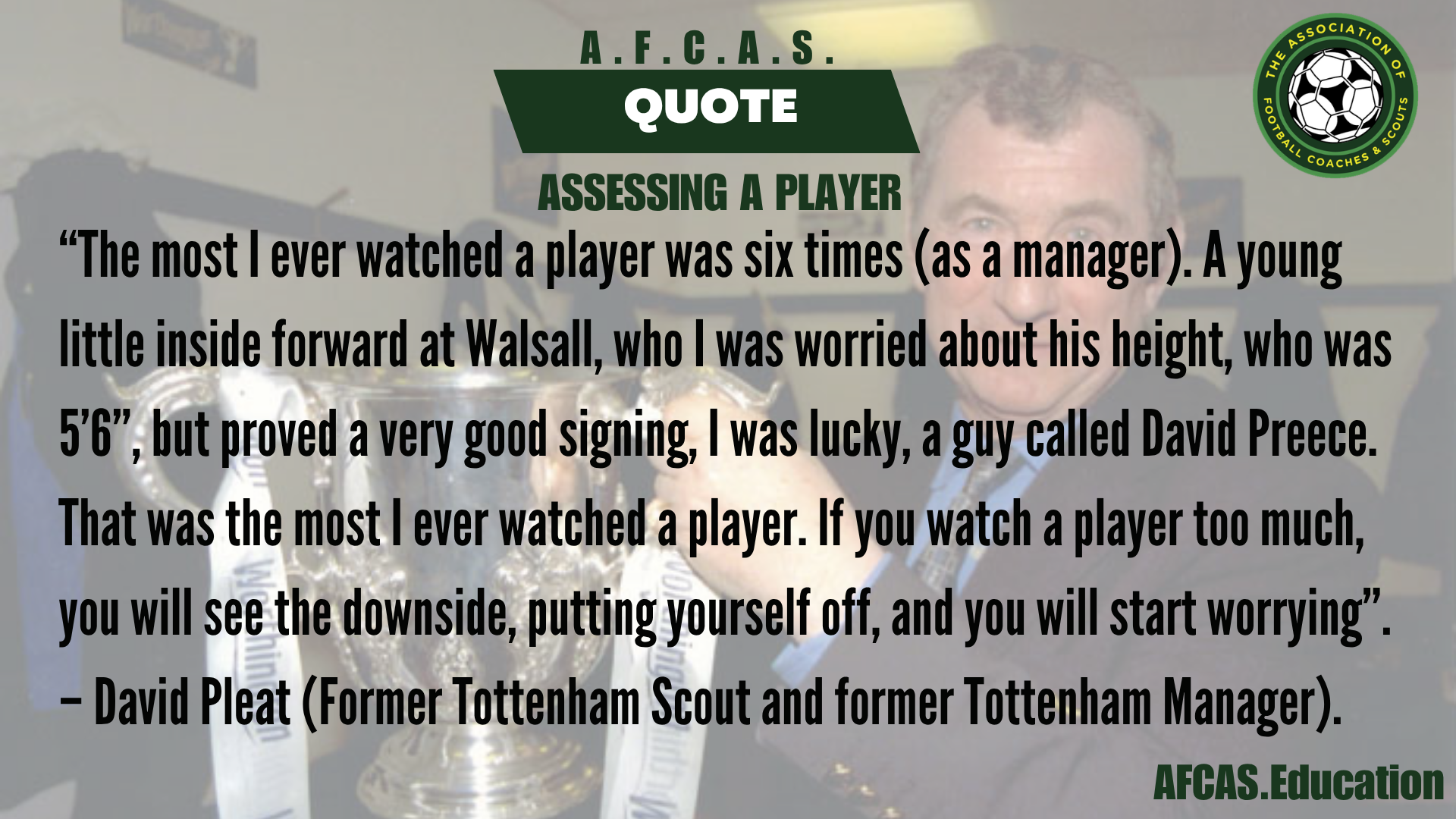
Former Tottenham Hotspur scout and experienced manager David Pleat highlighted this perfectly:
“The most I ever watched a player was six times… If you watch a player too much, you will see the downside… you will start worrying.”
This is a powerful insight into scouting psychology in football.
The more you watch:
- The more you notice weaknesses
- The more small flaws become magnified
- The more doubt can creep into your assessment
Instead of seeing the player’s overall value, you risk focusing on what they can’t do.
Balance Is Everything in Player Assessment
This does not mean scouts should limit their viewing carelessly.
Proper due diligence in football recruitment is essential.
But it must be balanced.
The objective is to:
- Understand the player’s strengths
- Recognise weaknesses (without over-emphasising them)
- Assess suitability for a specific role or system
Scouting is not about finding perfect players.
It is about finding the right players for the right context.
Why Multiple Scouts Improve Decision-Making
One of the most effective ways to strengthen player assessment is through:
👉 Multiple independent observations
Different scouts will:
- See different details
- Interpret actions differently
- Highlight strengths others may miss
- Raise concerns others may overlook
When multiple scouts arrive at similar conclusions, it strengthens the recruitment decision.
This is a key principle in professional football scouting departments.
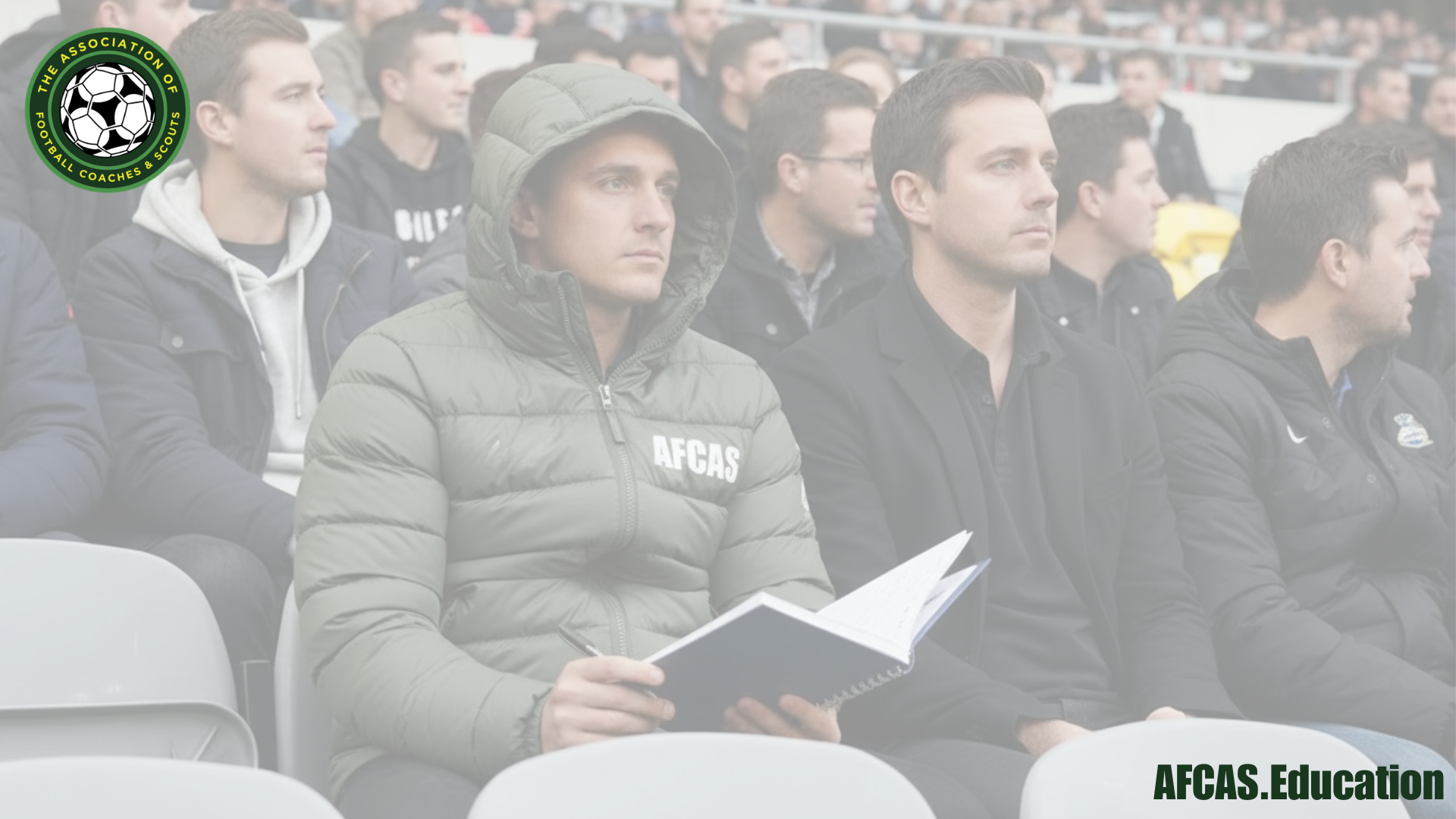
The Eye Test vs Data in Football
Modern football increasingly relies on data analytics in scouting.
But data alone cannot capture:
- Body language
- Decision-making under pressure
- Communication and leadership
- Tactical intelligence
- Personality and character
These are critical components of elite player performance.
And they can only be properly assessed through:
👉 Live observation
👉 Experience
👉 And a trained eye
How to Develop Your Eye for Scouting
The ‘eye test’ is not natural talent, it is developed through:
- Watching games regularly
- Studying player roles and responsibilities
- Comparing performances across matches
- Learning from experienced scouts and coaches
- Reflecting on your own assessments
This is where structured education becomes crucial.
AFCAS – Developing the Modern Football Scout
At AFCAS, we focus on developing:
- Your ability to analyse players effectively
- Your understanding of football scouting and recruitment
- Your confidence in making informed decisions
- Interactive learning……. not simply lectures.
Our courses are designed to help you:
👉 Combine the eye test with modern analysis with interactive tasks
👉 Understand what truly matters in player assessment
👉 Think like a professional scout
Final Thought
In a world increasingly driven by data, the best scouts still rely on something more powerful:
👉 Judgement
The ability to see what others miss.
The ability to interpret, not just observe.
That is the real value of the eye test in football.
Start Your Scouting Journey
If you want to improve your football scouting skills, develop your understanding of player analysis, and learn how to apply the eye test effectively:
👉 https://afcas.education/football-scouting
Take the next step towards thinking and working like a professional scout.
Further reading – https://afcas.education/15487-2

Originally published by AFCAS – Association of Football Coaches and Scouts
The coaching frameworks, scouting methodologies, player assessment models and educational content contained within the AFCAS Education Hub have been developed from the practical experiences of AFCAS educators working within grassroots, academy, professional and international football.
Original AFCAS Educational Content
The educational content, coaching principles, scouting methodologies and practical frameworks published within the AFCAS Education Hub have been developed through years of professional coaching, scouting and recruitment experience.
These articles represent original AFCAS educational material and are protected by copyright. Any reproduction, adaptation or commercial use without written permission is prohibited.
Please support original football education by sharing links to the original AFCAS articles rather than reproducing their content.
© AFCAS. All Rights Reserved.
About the Author
Ged Searson is the Managing Director of AFCAS and has over 30 years of coaching and scouting experience. He is a former Premier League First Team Scout, former EFL scout and former Chief Scout of the Malawi National Team. Through AFCAS, he has educated coaches and scouts from across the UK and around the world.
Published: 26 June 2026
Author: Ged Searson
Updated: 27 June 2026